What Is Private Label E-Commerce?
Imagine walking into a store and seeing two nearly identical products. One belongs to a well-known brand while the other is generic. Most buyers choose the branded option, even if the product quality is similar.
That is exactly how private label works.
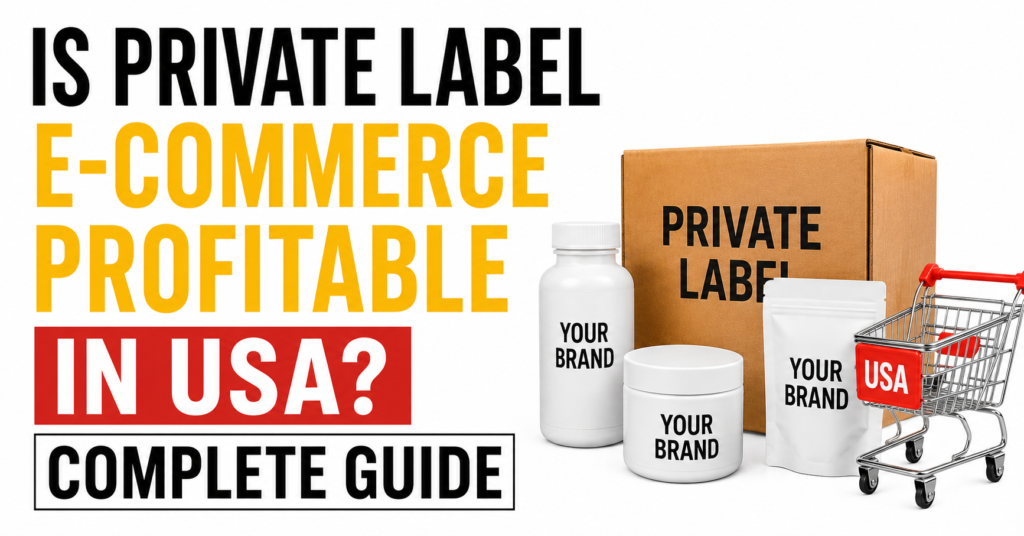
A business partners with a manufacturer, customizes a product, adds branding, and sells it under its own name. Instead of competing solely on price, sellers build a recognizable brand that customers trust.
Today, thousands of Amazon and Shopify sellers are using Private Label Services to create sustainable businesses rather than chasing short-term sales.
Why Is Private Label Growing in the USA?
The e-commerce market continues to expand rapidly. Consumers are becoming more comfortable purchasing products from independent brands rather than large retail chains.
Several factors are driving this growth:
- Higher demand for niche products
- Easier access to global manufacturers
- Improved fulfillment solutions
- Stronger brand-building opportunities
- Growth of Amazon FBA and Shopify stores
Businesses that invest in branding and customer experience often outperform generic sellers.
Many entrepreneurs now partner with an experienced e-commerce Branding Agency to position their products effectively from day one.
Is Private Label E-Commerce Still Profitable in 2026?
Yes, private label e-commerce remains highly profitable in 2026.
However, the market is more competitive than it was five years ago. Success no longer comes from simply listing a product online. Sellers need strategic branding, optimized listings, marketing campaigns, and operational systems.
Average Profit Margins
| Business Model | Average Profit Margin |
| Retail Arbitrage | 10% – 20% |
| Wholesale | 15% – 30% |
| Dropshipping | 10% – 25% |
| Private Label E-Commerce | 25% – 60% |
Private label businesses generally achieve higher margins because owners control branding, pricing, and customer perception.
According to industry trends, many successful Amazon private label brands generate six to seven figures annually when supported by proper product research and marketing.
For a deeper understanding of product selection strategies, review this guide from BigCommerce on Amazon private label products.
Profit Potential and Cost Breakdown
Starting a private label business requires investment, but the long-term earning potential can be significant.
Typical Startup Costs
- Product research
- Manufacturing samples
- Initial inventory
- Branding and packaging
- Amazon or Shopify setup
- Advertising campaigns
A beginner may invest anywhere between $3,000 and $15,000, depending on product category and launch strategy.
Example Scenario
Product Cost: $8
Selling Price: $29.99
Fulfillment & Fees: $8
Advertising Cost: $4
Net Profit: Approximately $10 per unit
At 1,000 monthly sales, that becomes roughly $10,000 in monthly profit before operational expenses.
This is why many entrepreneurs view E-commerce Private Label as a long-term wealth-building strategy rather than a side hustle.
Benefits of Private Label E-Commerce
1. Higher Profit Margins
You control pricing and positioning instead of competing directly with hundreds of identical sellers.
2. Brand Ownership
Every sale strengthens your brand rather than another company’s reputation.
3. Scalability
A successful product can expand into an entire product line.
4. Business Valuation
Branded e-commerce businesses often sell for significantly higher multiples compared to generic stores.
5. Customer Loyalty
Strong branding creates repeat purchases and long-term customer relationships.
Businesses looking to establish a professional foundation often start with dedicated Amazon Private Label Services that cover product sourcing, listing optimization, and launch strategies.
Common Challenges and Risks
While profitable, private label is not risk-free.
Inventory Management
Poor forecasting can lead to stockouts or excess inventory.
Competitive Markets
Popular niches attract many sellers.
Advertising Costs
Amazon PPC and social media advertising costs continue to rise.
Branding Mistakes
Weak branding makes products appear generic and reduces conversion rates.
This is where working with an experienced Amazon Private Label Agency can significantly reduce costly mistakes.
How Agencies Help You Scale Faster
Many successful sellers no longer manage everything themselves.
Instead, they use specialized partners that provide:
- Product research
- Supplier sourcing
- Brand development
- Amazon account management
- Listing optimization
- Advertising management
- Inventory planning
Companies offering e-commerce Automation Services streamline operations so owners can focus on growth instead of daily tasks.
If you’re planning to launch a branded store, AMZ Waves offers specialized private label e-commerce solutions designed for entrepreneurs who want expert guidance from product selection to scaling.
For sellers focused on Amazon growth, their Amazon store management services help simplify complex operational tasks.
Businesses seeking a personalized strategy can also schedule a consultation with their team.
Key Insight #1
Brand Equity Creates Long-Term Profit
Most failed sellers focus only on products.
Successful sellers focus on brands.
A product can be copied.
A trusted brand is much harder to replicate.
“Products generate sales. Brands generate loyalty.”
Key Insight #2
Automation Is Becoming a Competitive Advantage
In 2026, operational efficiency often determines profitability.
Businesses using Amazon Automation Agency support can scale faster because systems handle repetitive tasks while owners focus on strategic growth.
Key Insight #3
Multi-Channel Selling Increases Stability
Relying on a single marketplace creates risk.
Many brands combine:
- Amazon
- Shopify
- TikTok Shop
- Social Commerce
This diversified approach improves revenue stability and growth potential..
FAQs
Is private label e-commerce profitable for beginners?
Yes. Beginners can build profitable brands if they focus on product research, branding, and proper execution.
How much money is needed to start a private label business?
Most sellers start with $3,000 to $15,000, depending on inventory and marketing requirements.
Is Amazon’s private label still worth it in 2026?
Yes. Amazon remains one of the largest opportunities for launching and scaling branded products.
What is a Done For You Amazon FBA service?
A Done For You Amazon FBA service manages sourcing, launching, optimization, and scaling on behalf of business owners.
Why should I hire an Amazon Private Label Agency?
An agency reduces costly mistakes, accelerates growth, and provides expert support across operations and marketing.
What is the difference between dropshipping and private label?
Dropshipping sells third-party products, while private label businesses own and market products under their own brand.
Final Thoughts
Private label e-commerce is still one of the strongest opportunities for entrepreneurs who want to build a real asset rather than chase temporary online trends.
The winners in 2026 are not necessarily those with the biggest budgets. They’re the businesses that combine smart product selection, strong branding, operational efficiency, and customer-focused marketing.
For sellers who want a faster path to growth, professional E-Commerce Private Label Services In USA can provide the expertise, systems, and support needed to launch with confidence and scale sustainably.
Ready to Build a Profitable Private Label Brand?
Whether you’re launching your first product or scaling an existing store, expert guidance can save months of trial and error.
✓ Product Research
✓ Brand Development
✓ Store Setup
✓ Amazon Growth Strategy
✓ Automation Support